Record
Record was my final project at university.
Acting as an opportunity to explore a domain of my choice, I anchored my project on the key theme of collecting music. I was to identify a design opportunity within the context of this theme, designing an experience in response to real human needs and behaviours.
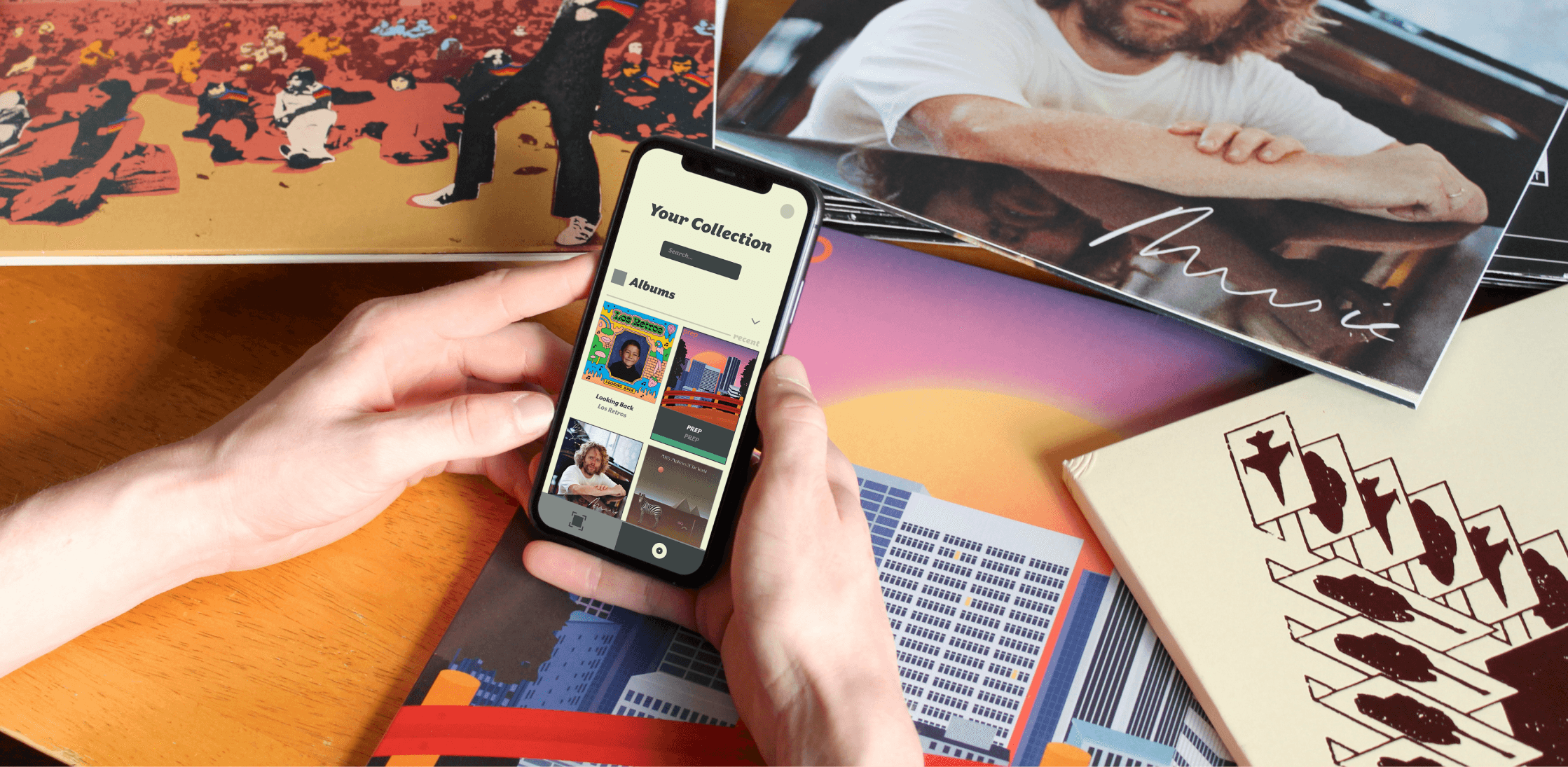
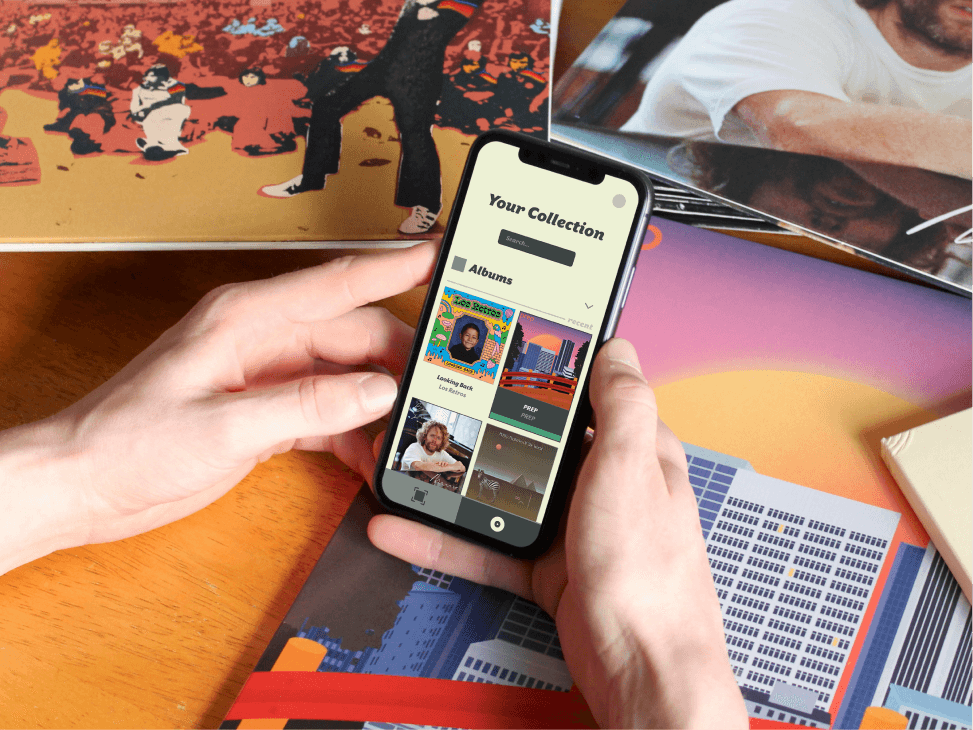
My final outcome was a high-fidelity prototype of an app - Record - which set out to give the user an enhanced sense of ownership over their music collection.
February 2021, 8 weeks
Record was my final project at university.
Acting as an opportunity to explore a domain of my choice, I anchored my project on the key theme of collecting music. I was to identify a design opportunity within the context of this theme, designing an experience in response to real human needs and behaviours.
My final outcome was a high-fidelity prototype of an app - Record - which set out to give the user an enhanced sense of ownership over their music collection.
February 2021, 8 weeks
Record was my final project at university.
Acting as an opportunity to explore a domain of my choice, I anchored my project on the key theme of collecting music. I was to identify a design opportunity within the context of this theme, designing an experience in response to real human needs and behaviours.
My final outcome was a high-fidelity prototype of an app - Record - which set out to give the user an enhanced sense of ownership over their music collection.
February 2021, 8 weeks
Overview
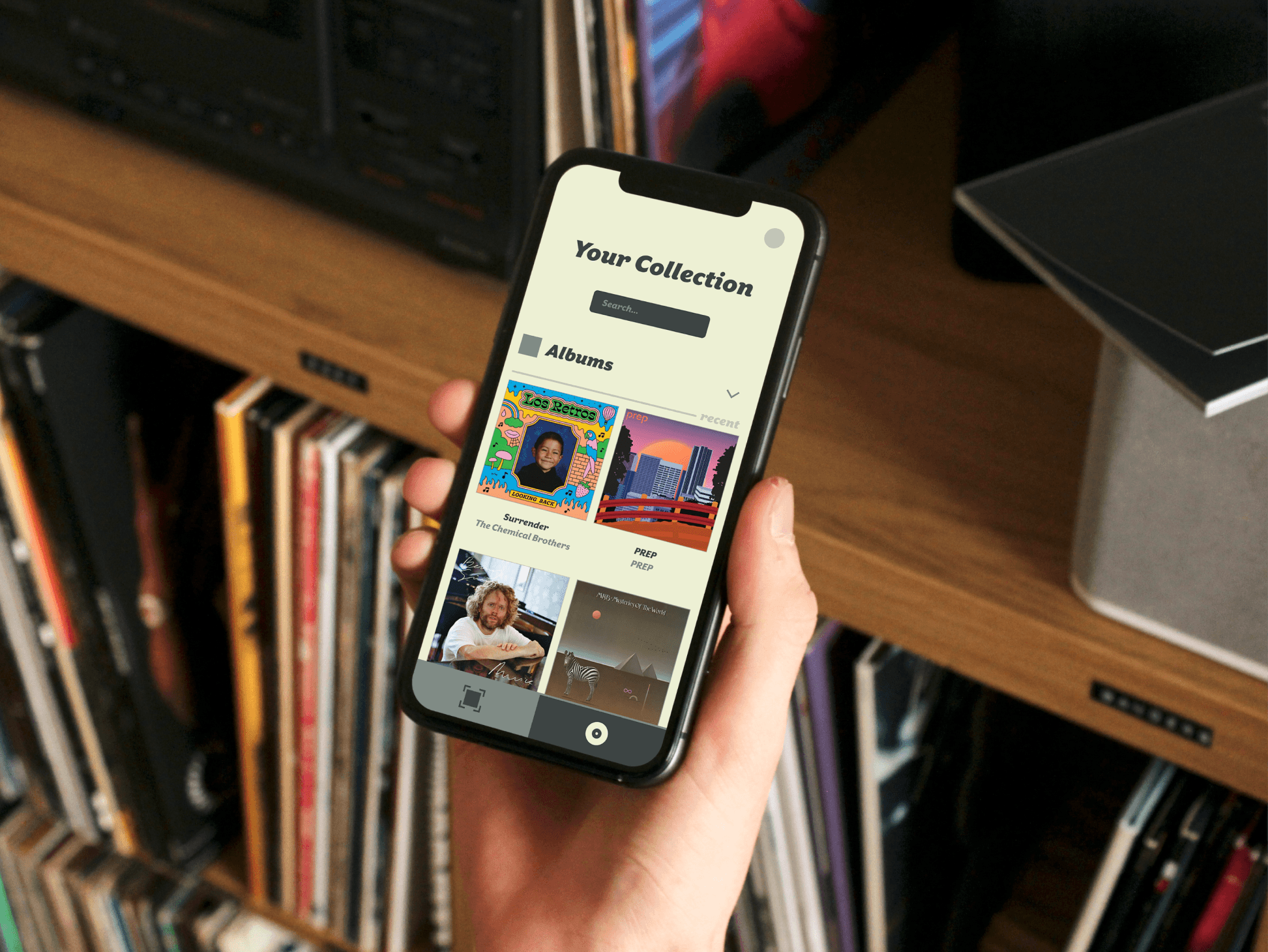
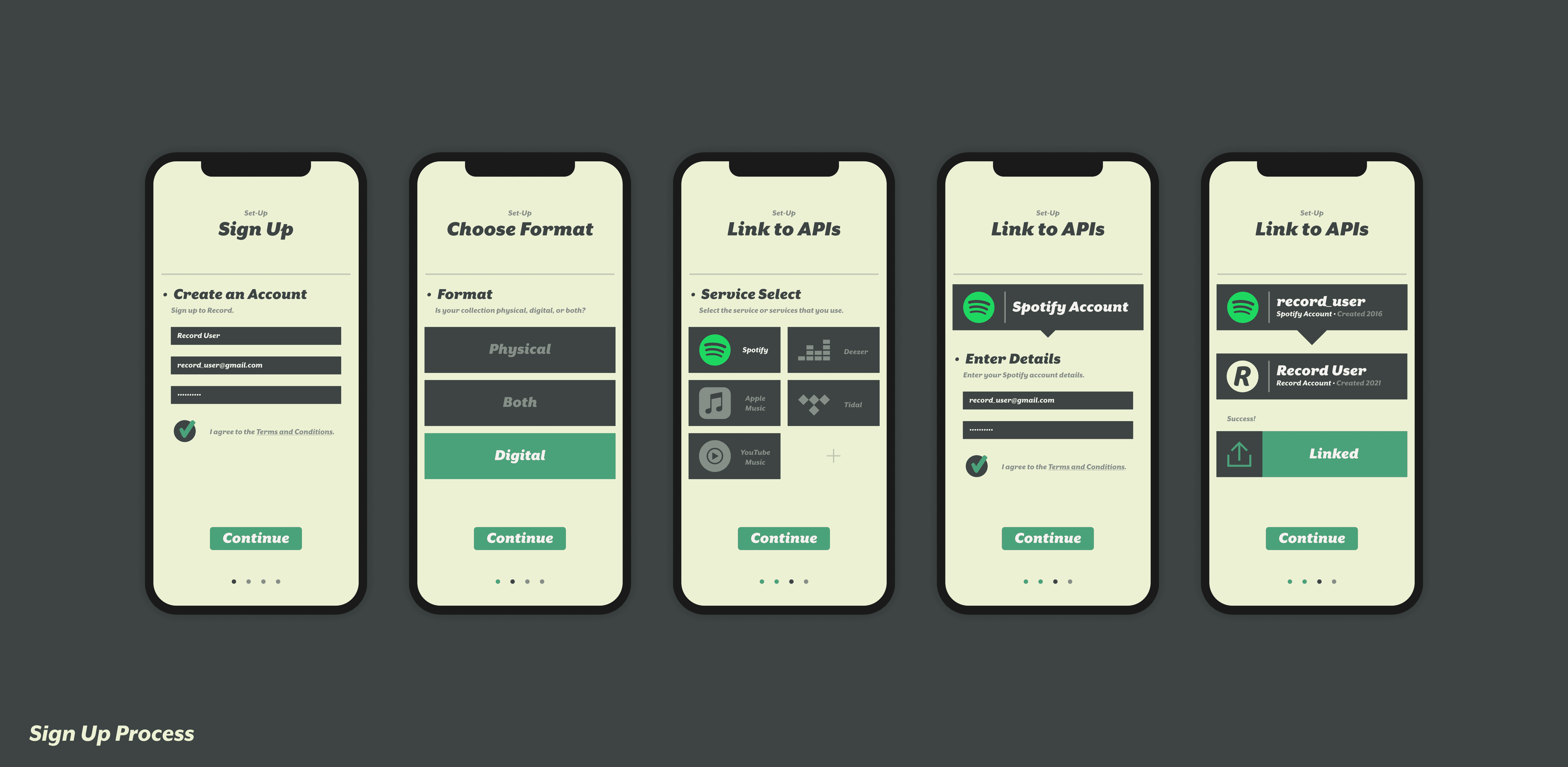
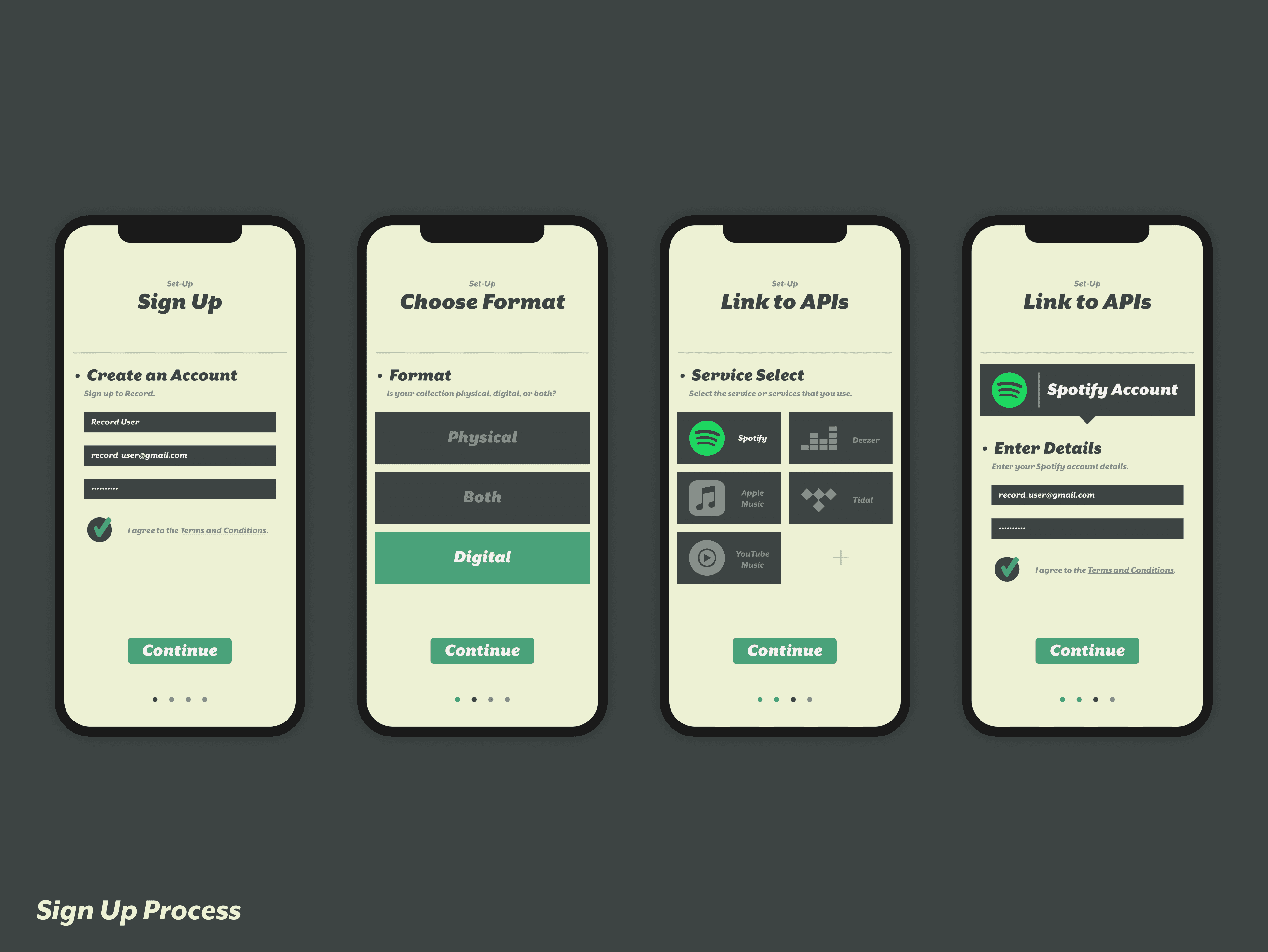
Record acts as a home to the user’s music library. Users can synthesise their entire library - across different platforms and formats - gathering and securing their collection.
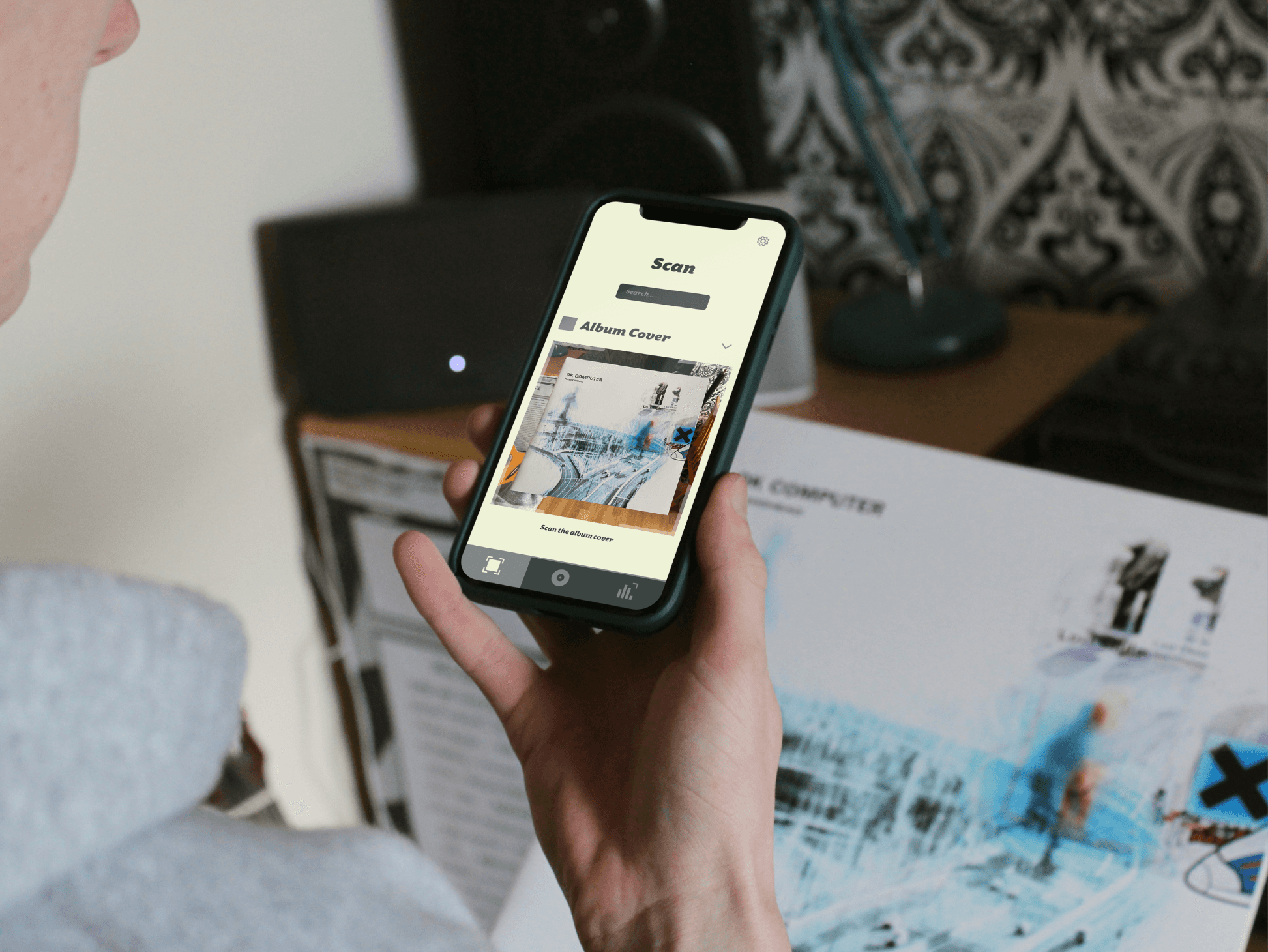
It offers various functions to upload physical music - the user can scan album covers, catalogue numbers and barcodes, or search for music manually.
Users can also upload digital music - by linking their Record App with popular streaming services.
Overview
Record acts as a home to the user’s music library. Users can synthesise their entire library - across different platforms and formats - gathering and securing their collection.
It offers various functions to upload physical music - the user can scan album covers, catalogue numbers and barcodes, or search for music manually.
Users can also upload digital music - by linking their Record App with popular streaming services.
Overview
Record acts as a home to the user’s music library. Users can synthesise their entire library - across different platforms and formats - gathering and securing their collection.
It offers various functions to upload physical music - the user can scan album covers, catalogue numbers and barcodes, or search for music manually.
Users can also upload digital music - by linking their Record App with popular streaming services.
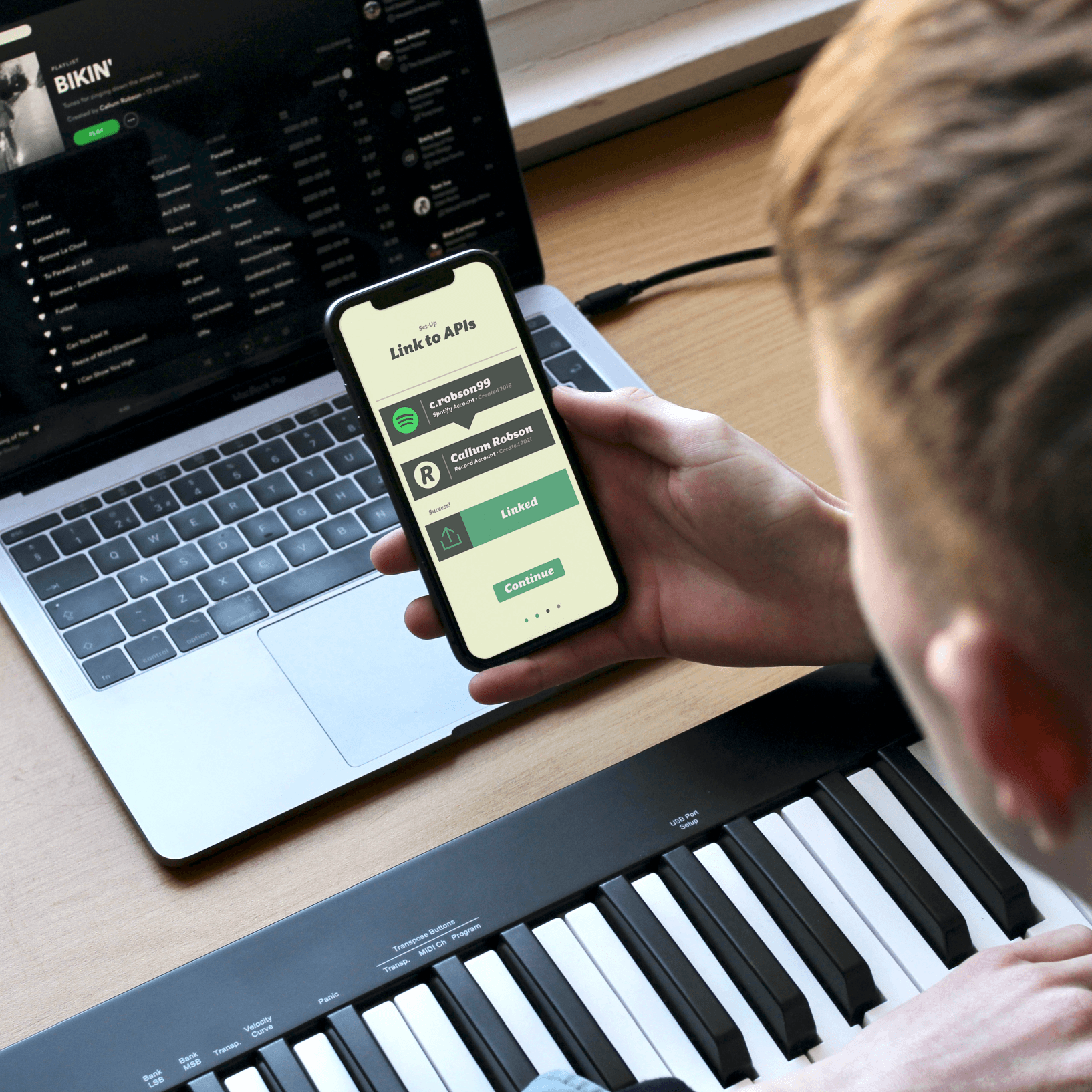
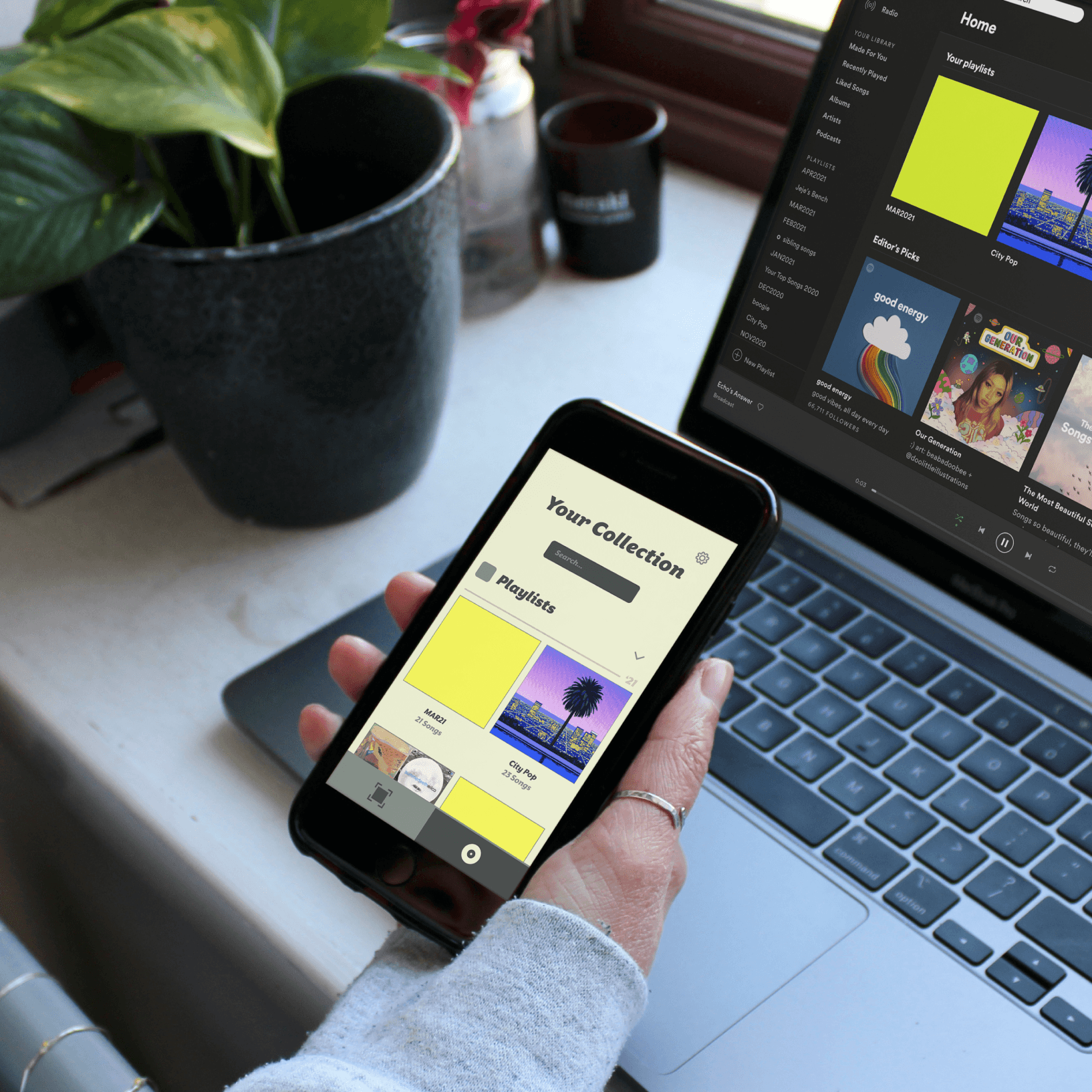
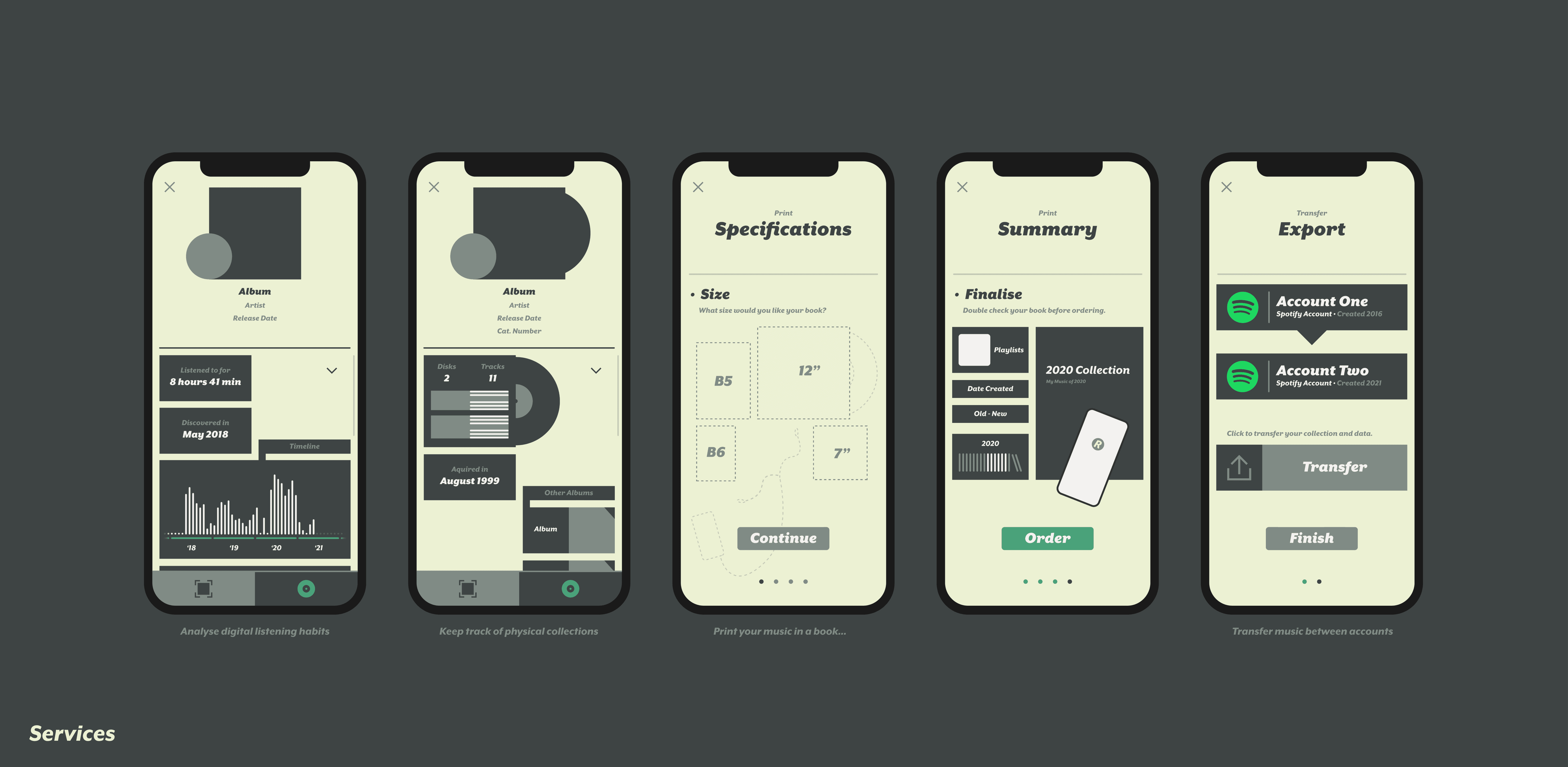
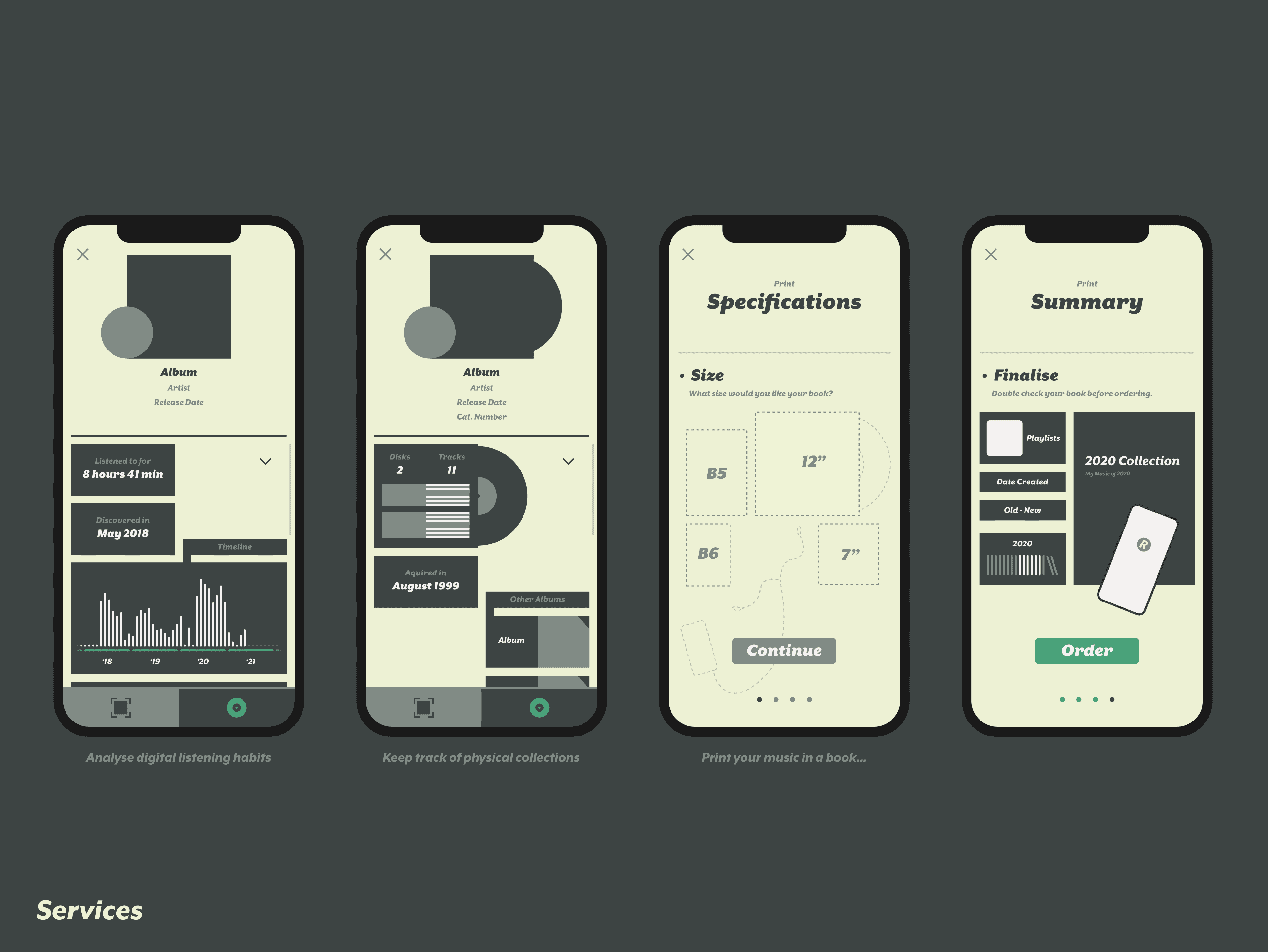
In collating the user's entire music library, Record is able to offer a series of sub-tools.
User's can gain insight into their listening and purchasing habits - they can print their collection in a book - or transfer music between streaming platforms.
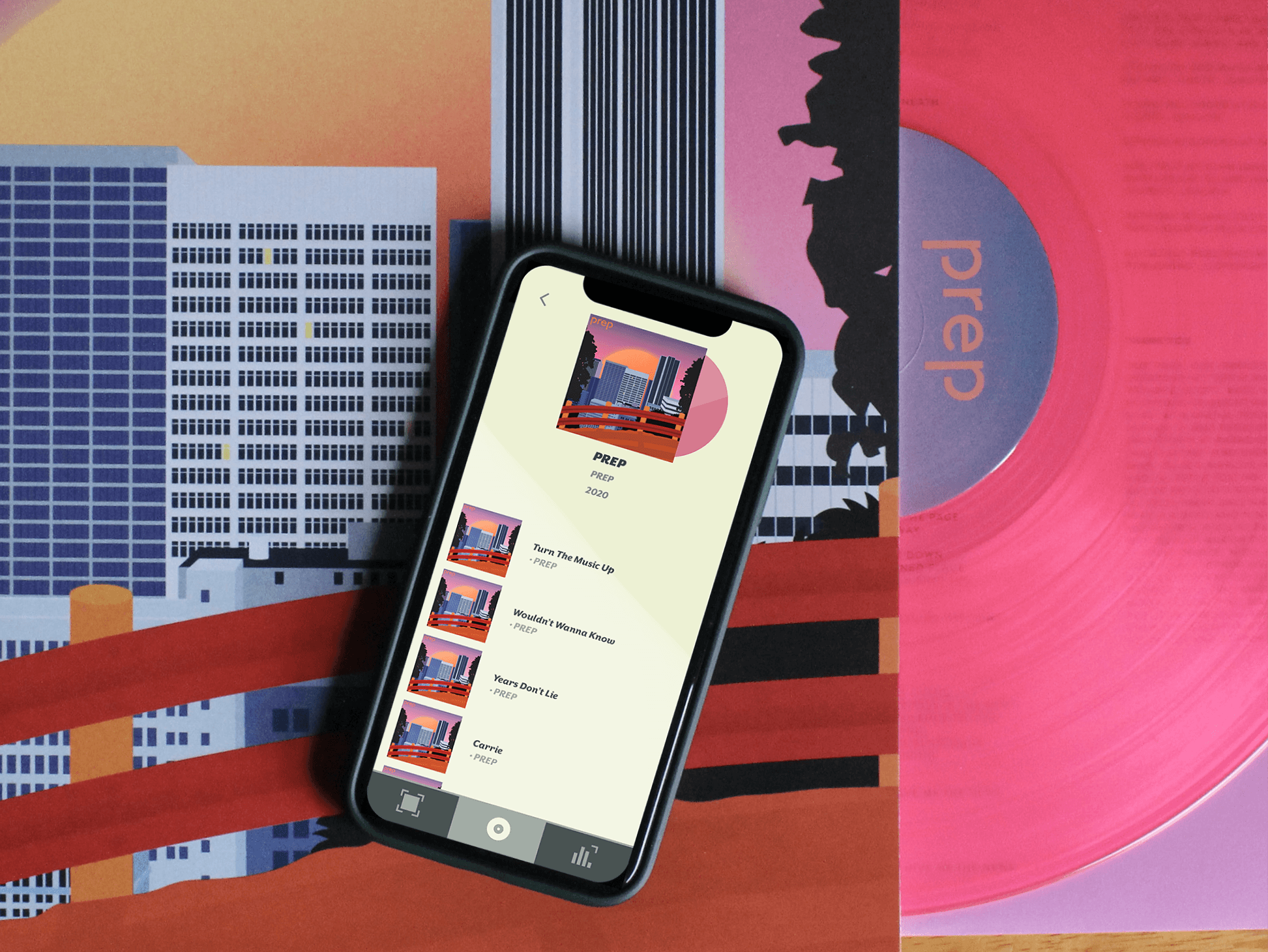
In collating the user's entire music library, Record is able to offer a series of sub-tools.
User's can gain insight into their listening and purchasing habits - they can print their collection in a book - or transfer music between streaming platforms.
In collating the user's entire music library, Record is able to offer a series of sub-tools.
User's can gain insight into their listening and purchasing habits - they can print their collection in a book - or transfer music between streaming platforms.
Discover
At its core, the project involved engaging with music collectors, delving into their habits and rituals, to ultimately design a platform aimed at enriching their experiences of owning and collecting music.
To begin this ethnographic research, I organised a series of workshops focused on exploring the ways in which music collectors curate and interact with their libraries.
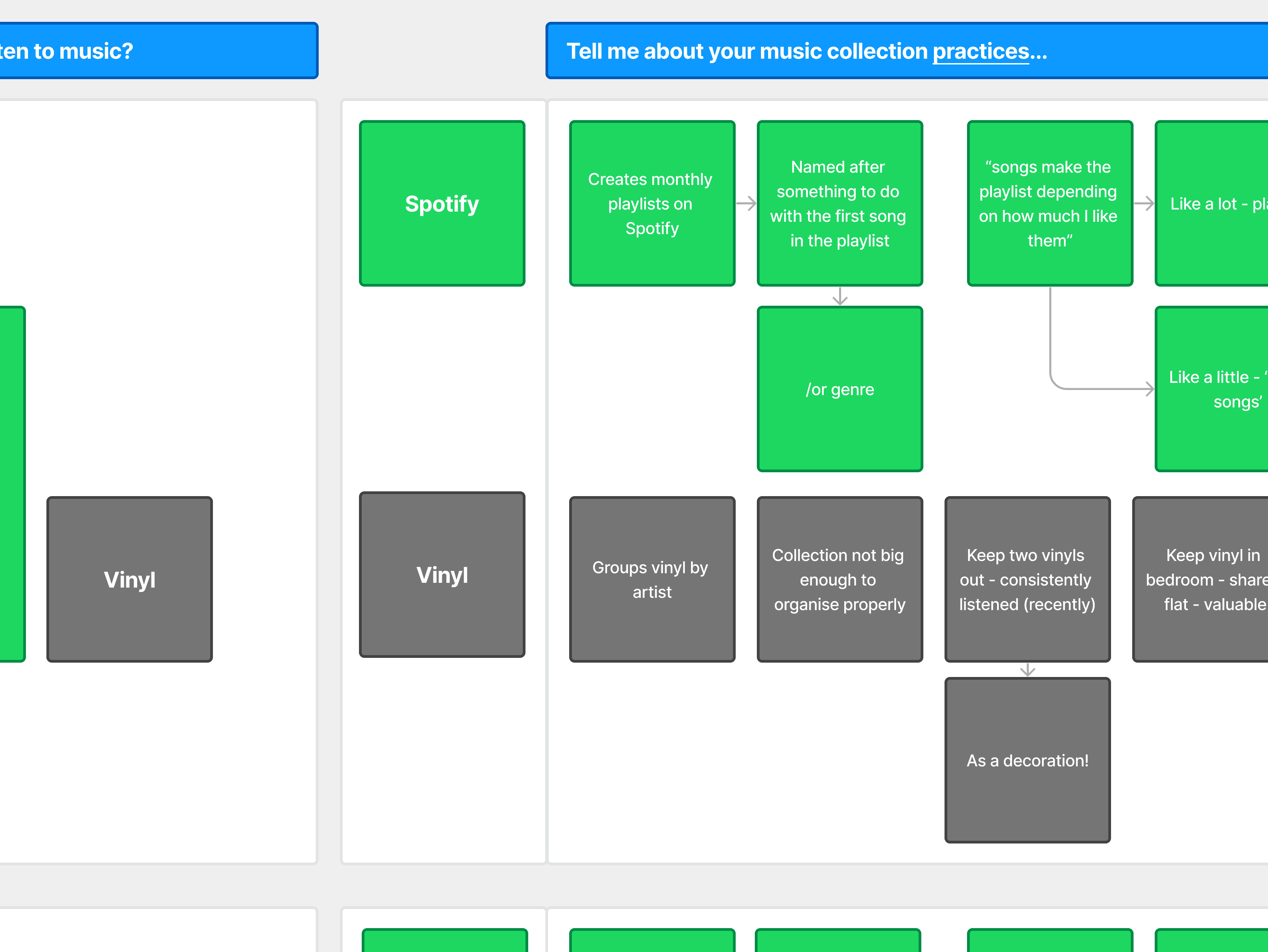
The most effective of these was a scaffolding workshop, in which I asked participants a set of questions designed to structure discussion and facilitate the discovery of insights.
Discover
At its core, the project involved engaging with music collectors, delving into their habits and rituals, to ultimately design a platform aimed at enriching their experiences of owning and collecting music.
To begin this ethnographic research, I organised a series of workshops focused on exploring the ways in which music collectors curate and interact with their libraries.
The most effective of these was a scaffolding workshop, in which I asked participants a set of questions designed to structure discussion and facilitate the discovery of insights.
Discover
At its core, the project involved engaging with music collectors, delving into their habits and rituals, to ultimately design a platform aimed at enriching their experiences of owning and collecting music.
To begin this ethnographic research, I organised a series of workshops focused on exploring the ways in which music collectors curate and interact with their libraries.
The most effective of these was a scaffolding workshop, in which I asked participants a set of questions designed to structure discussion and facilitate the discovery of insights.
A pivotal insight, was that 80% of participants listened to music in multiple formats - on various streaming platforms, vinyl, CDs and so on.
One participant described their collection as “fragile” - a further comment on the dispersed and vulnerable nature of music collections across different mediums.
The findings from these sessions acted as driving factors in the design of the app - Record - the name of which serves as a tribute to this key insight.
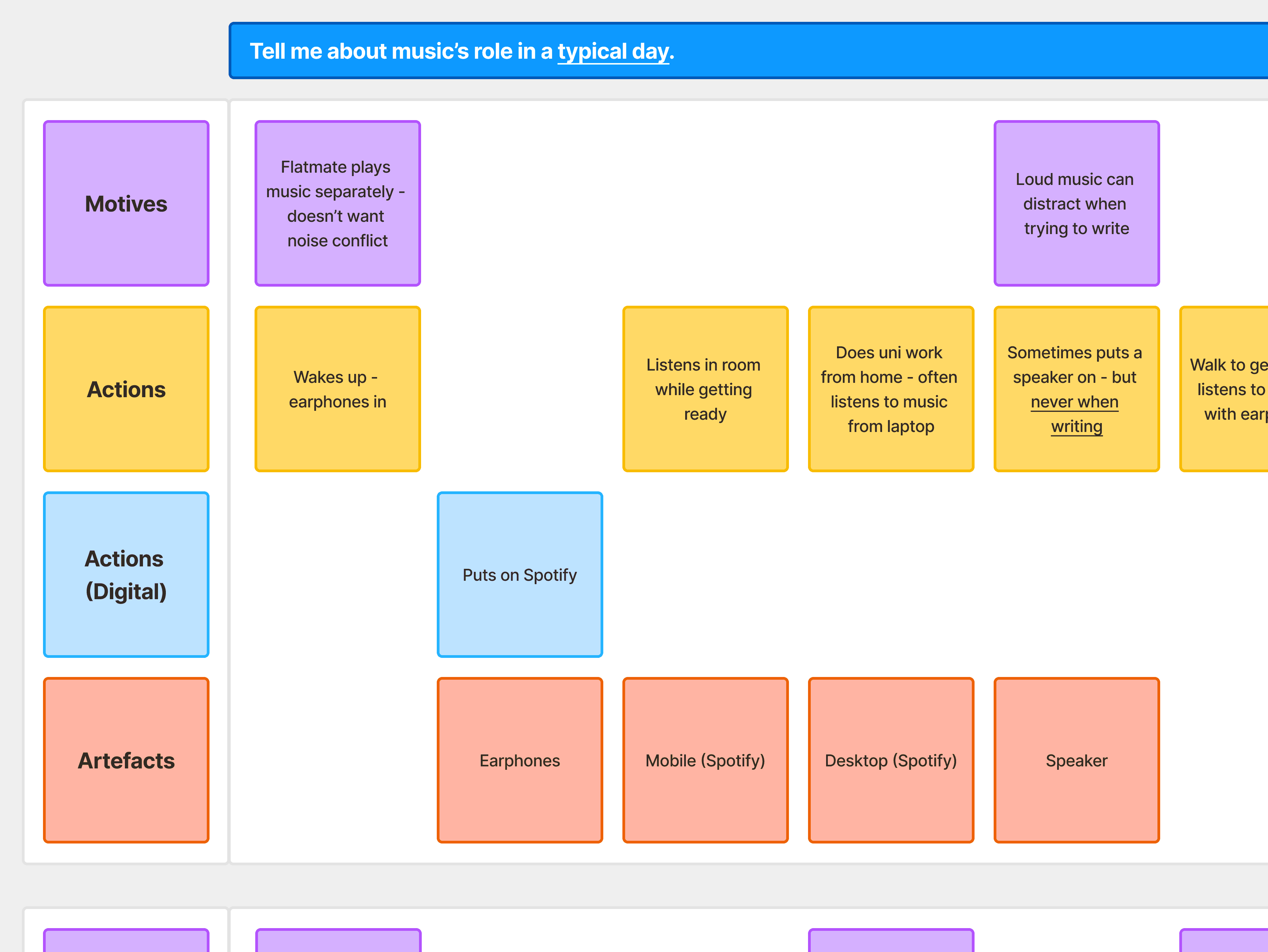
A pivotal insight, was that 80% of participants listened to music in multiple formats - on various streaming platforms, vinyl, CDs and so on.
One participant described their collection as “fragile” - a further comment on the dispersed and vulnerable nature of music collections across different mediums.
The findings from these sessions acted as driving factors in the design of the app - Record - the name of which serves as a tribute to this key insight.
A pivotal insight, was that 80% of participants listened to music in multiple formats - on various streaming platforms, vinyl, CDs and so on.
One participant described their collection as “fragile” - a further comment on the dispersed and vulnerable nature of music collections across different mediums.
The findings from these sessions acted as driving factors in the design of the app - Record - the name of which serves as a tribute to this key insight.
Define
The initial workshops helped me realise the perceived vulnerability modern music collation. This provided a design opportunity - could my app act as a space to gather and secure the user’s entire music library?
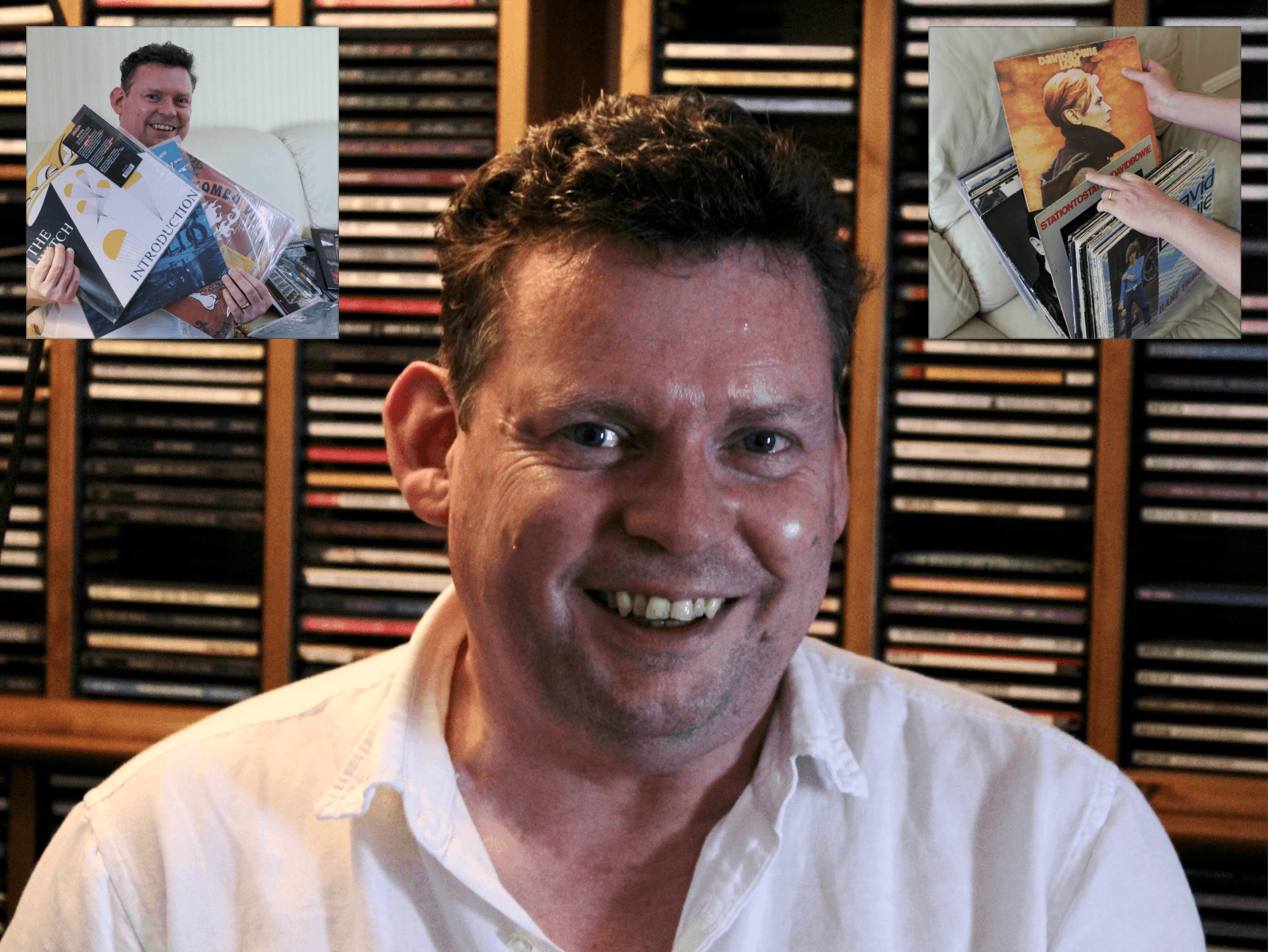
This concept still needed to be defined - and designed - around real collection practices. For this reason, I chose to engage more intimately, in one on one sessions, working with music collectors to perform contextual inquiries into their collections.
This involved going into the collector’s library in detail, whether that be their physical CD collection, or a deep dive into their Spotify playlists.
Define
The initial workshops helped me realise the perceived vulnerability modern music collation. This provided a design opportunity - could my app act as a space to gather and secure the user’s entire music library?
This concept still needed to be defined - and designed - around real collection practices. For this reason, I chose to engage more intimately, in one on one sessions, working with music collectors to perform contextual inquiries into their collections.
This involved going into the collector’s library in detail, whether that be their physical CD collection, or a deep dive into their Spotify playlists.
Define
The initial workshops helped me realise the perceived vulnerability modern music collation. This provided a design opportunity - could my app act as a space to gather and secure the user’s entire music library?
This concept still needed to be defined - and designed - around real collection practices. For this reason, I chose to engage more intimately, in one on one sessions, working with music collectors to perform contextual inquiries into their collections.
This involved going into the collector’s library in detail, whether that be their physical CD collection, or a deep dive into their Spotify playlists.
These key subjects acted as champions to my design - their input served a critical role in the ideation process.
I took note of the insights I had gained from the contextual enquiries, and the previous workshops, and began to brainstorm opportunities for design.
I thought about the various environments that Record might have, the processes required to upload music, and additional features to add value to the collection experience - for example, could Stav (pictured above), after uploading his physical collection, gain insight into the albums he owns - and doesn’t own - playing to his desire to collect an entire artist’s discography?
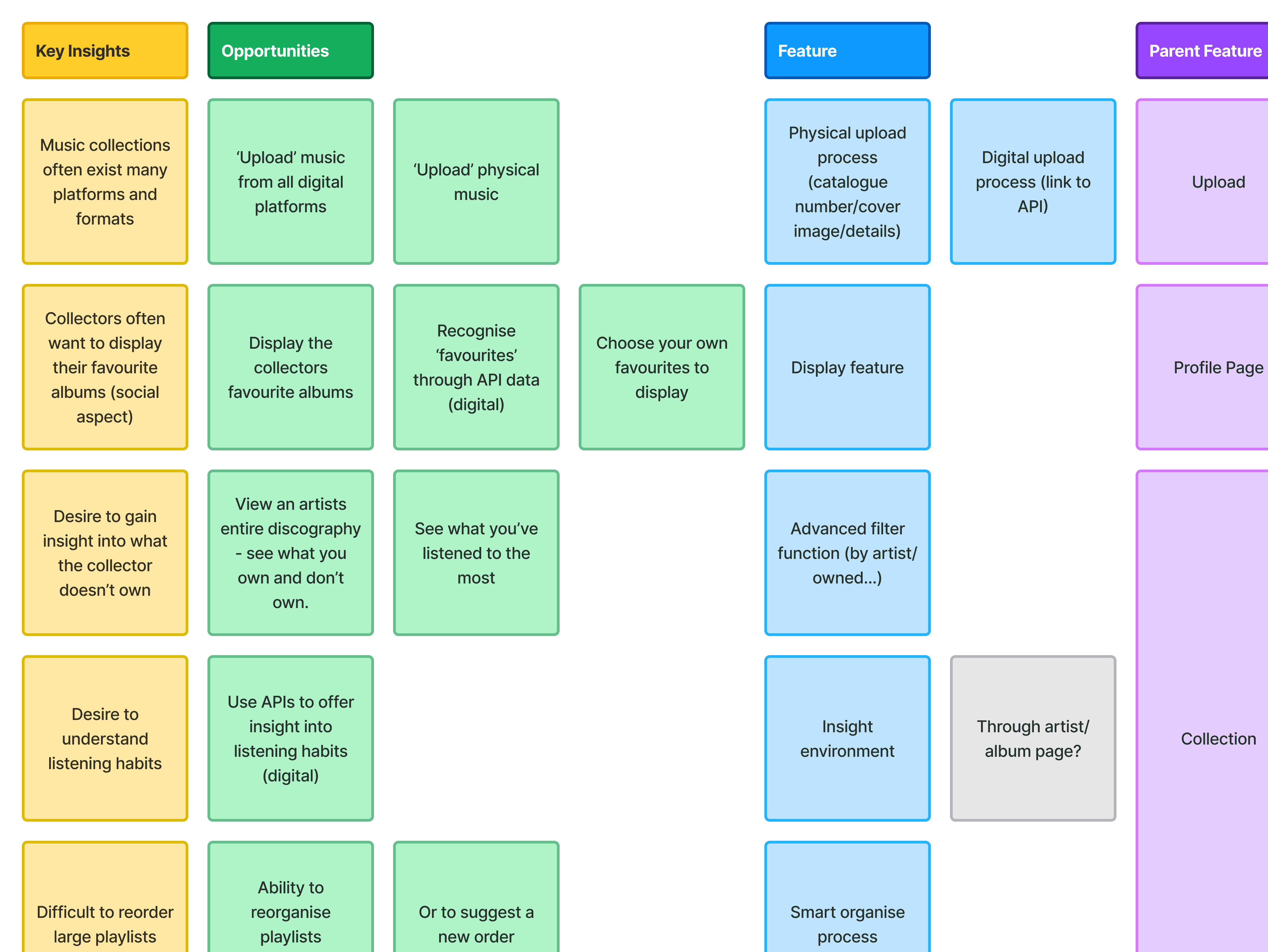
These key subjects acted as champions to my design - their input served a critical role in the ideation process.
I took note of the insights I had gained from the contextual enquiries, and the previous workshops, and began to brainstorm opportunities for design.
I thought about the various environments that Record might have, the processes required to upload music, and additional features to add value to the collection experience - for example, could Stav (pictured above), after uploading his physical collection, gain insight into the albums he owns - and doesn’t own - playing to his desire to collect an entire artist’s discography?
These key subjects acted as champions to my design - their input served a critical role in the ideation process.
I took note of the insights I had gained from the contextual enquiries, and the previous workshops, and began to brainstorm opportunities for design.
I thought about the various environments that Record might have, the processes required to upload music, and additional features to add value to the collection experience - for example, could Stav (pictured above), after uploading his physical collection, gain insight into the albums he owns - and doesn’t own - playing to his desire to collect an entire artist’s discography?
Develop
I began to develop opportunities by creating user flows. This involved mapping out the steps of various processes to gain an understanding of the decisions and actions involved.
In this image I consider the upload process, and how the user might put their physical music into the Record system.
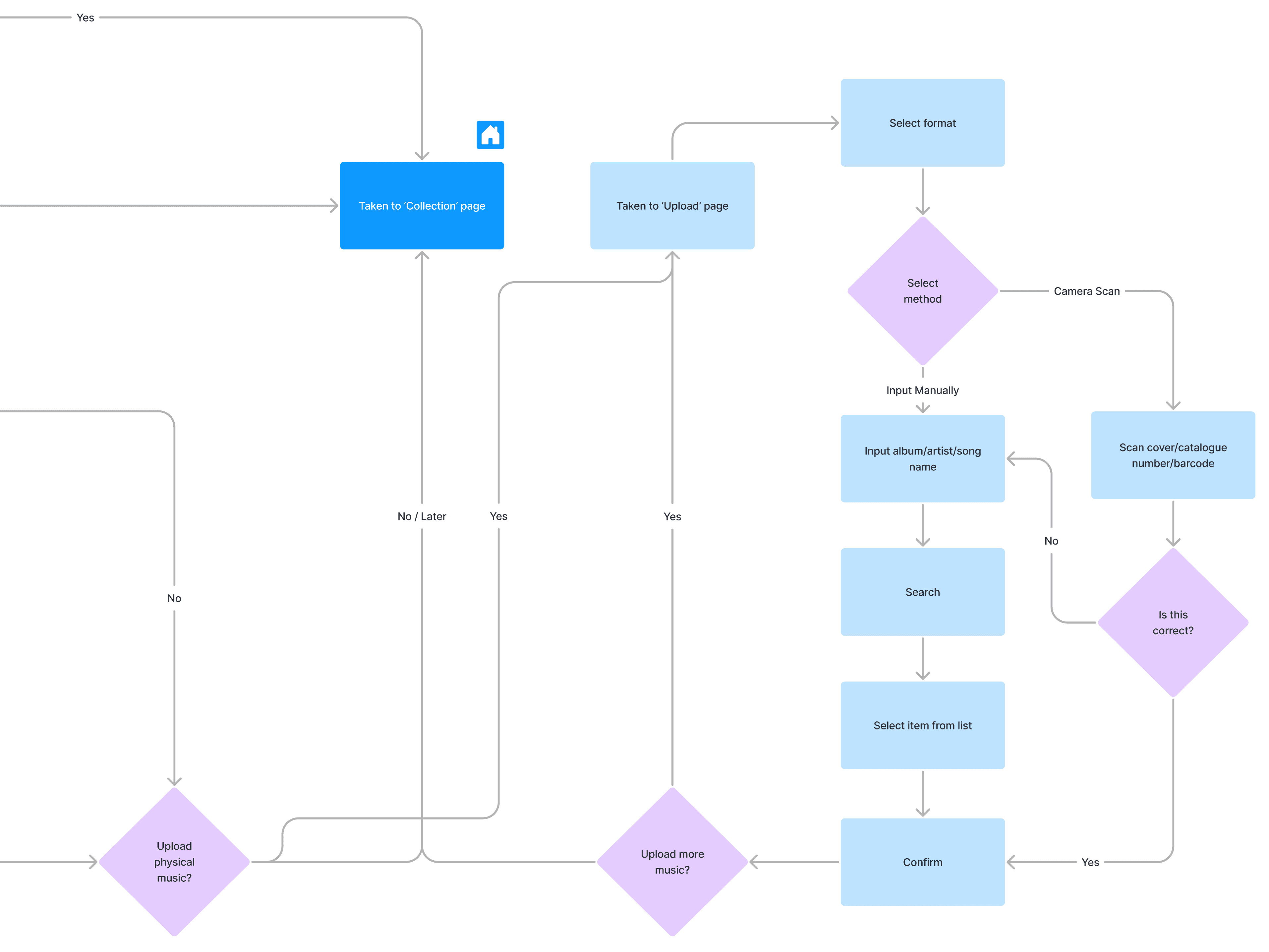
Develop
I began to develop opportunities by creating user flows. This involved mapping out the steps of various processes to gain an understanding of the decisions and actions involved.
In this image I consider the upload process, and how the user might put their physical music into the Record system.
Develop
I began to develop opportunities by creating user flows. This involved mapping out the steps of various processes to gain an understanding of the decisions and actions involved.
In this image I consider the upload process, and how the user might put their physical music into the Record system.
These concepts were further brought to life with wireframes, which helped illustrate the fundamental environments, elements and relationships of the user interface.
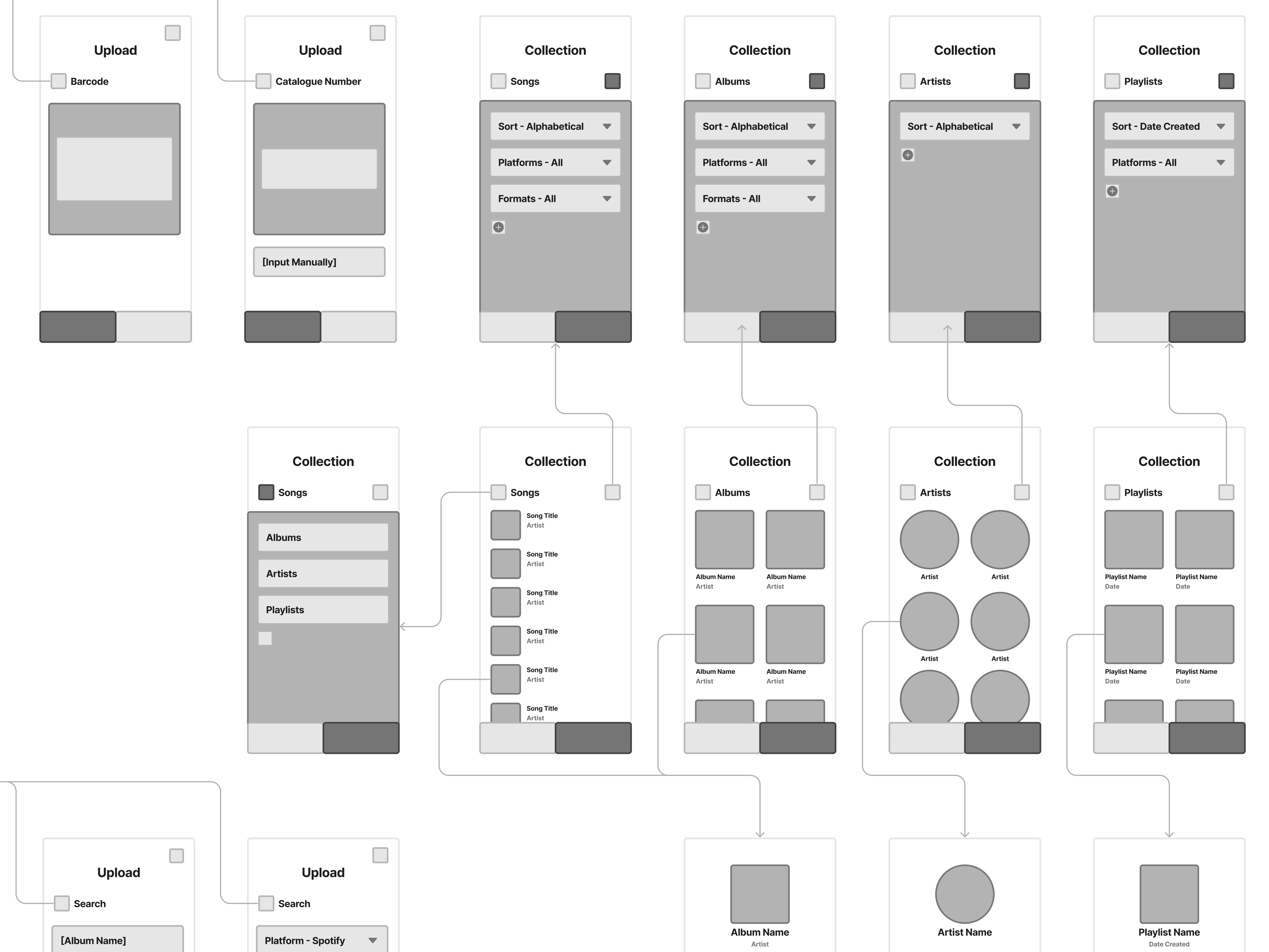
These concepts were further brought to life with wireframes, which helped illustrate the fundamental environments, elements and relationships of the user interface.
These concepts were further brought to life with wireframes, which helped illustrate the fundamental environments, elements and relationships of the user interface.
Deliver
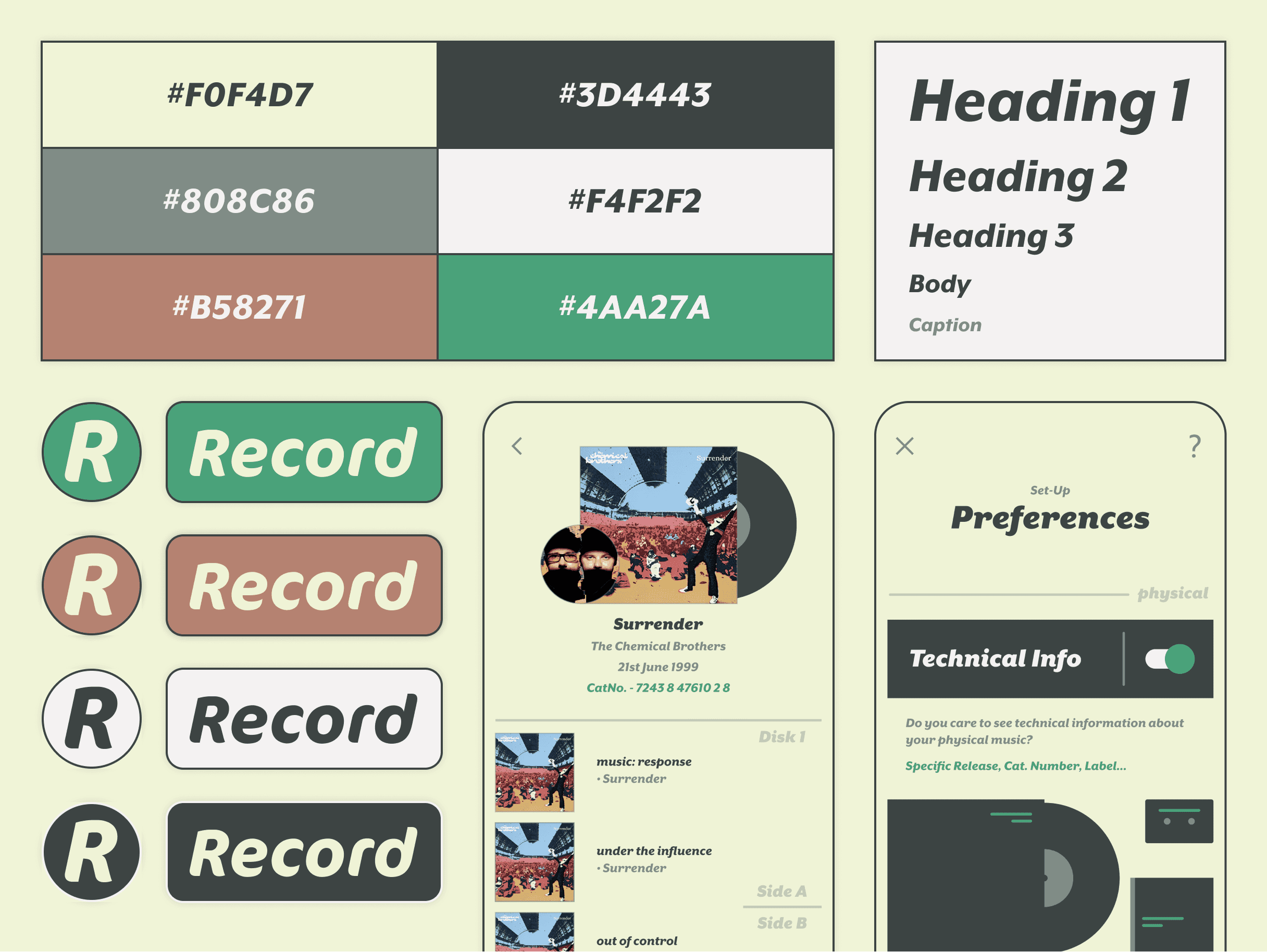
Record started coming to life with the creation of a simple visual identity - a set of brand materials and guidelines, including a logo, colour scheme and typeface.
I wanted to Record to feel secure yet soft, authoritative yet homely, reflecting the app's ability to gather and protect your music collection, whilst offering enjoyment and fun: balancing choices like sharp corners with a retro-modern colour scheme.
Deliver
Record started coming to life with the creation of a simple visual identity - a set of brand materials and guidelines, including a logo, colour scheme and typeface.
I wanted to Record to feel secure yet soft, authoritative yet homely, reflecting the app's ability to gather and protect your music collection, whilst offering enjoyment and fun: balancing choices like sharp corners with a retro-modern colour scheme.
Deliver
Record started coming to life with the creation of a simple visual identity - a set of brand materials and guidelines, including a logo, colour scheme and typeface.
I wanted to Record to feel secure yet soft, authoritative yet homely, reflecting the app's ability to gather and protect your music collection, whilst offering enjoyment and fun: balancing choices like sharp corners with a retro-modern colour scheme.
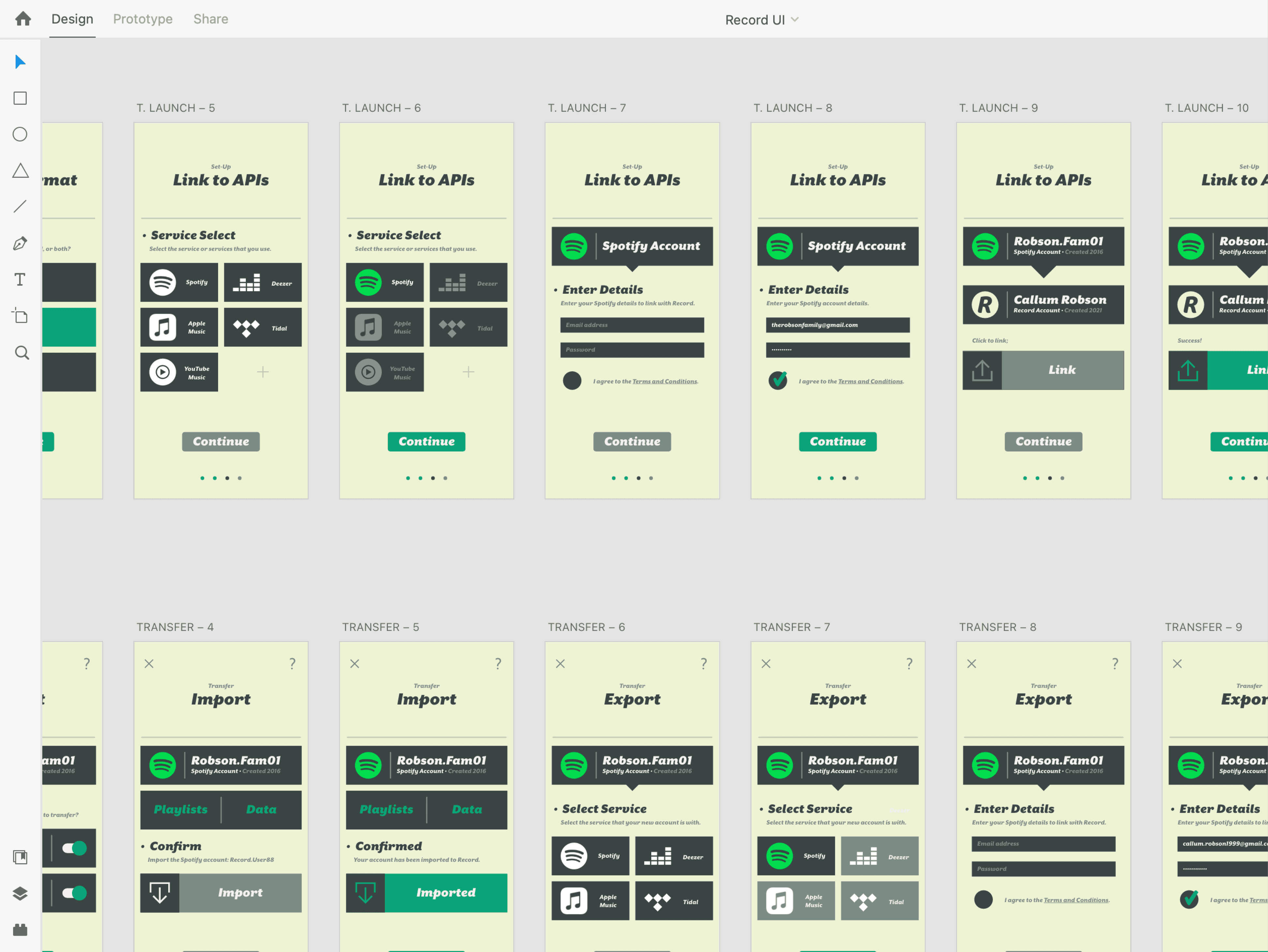
I had the basic building blocks of Record's design - insights had turned turned into opportunities, ideated upon with user flows and wireframes, to form patterns and processes which could be visually dictated by a set of brand guidelines.
I began to create Record's UI, making up various elements and environments on Adobe XD.
I took an iterative approach when doing so, playing with different layouts - and referring to the wireframes - to create a coherent look and feel across different functions.
I had the basic building blocks of Record's design - insights had turned turned into opportunities, ideated upon with user flows and wireframes, to form patterns and processes which could be visually dictated by a set of brand guidelines.
I began to create Record's UI, making up various elements and environments on Adobe XD.
I took an iterative approach when doing so, playing with different layouts - and referring to the wireframes - to create a coherent look and feel across different functions.
I had the basic building blocks of Record's design - insights had turned turned into opportunities, ideated upon with user flows and wireframes, to form patterns and processes which could be visually dictated by a set of brand guidelines.
I began to create Record's UI, making up various elements and environments on Adobe XD.
I took an iterative approach when doing so, playing with different layouts - and referring to the wireframes - to create a coherent look and feel across different functions.
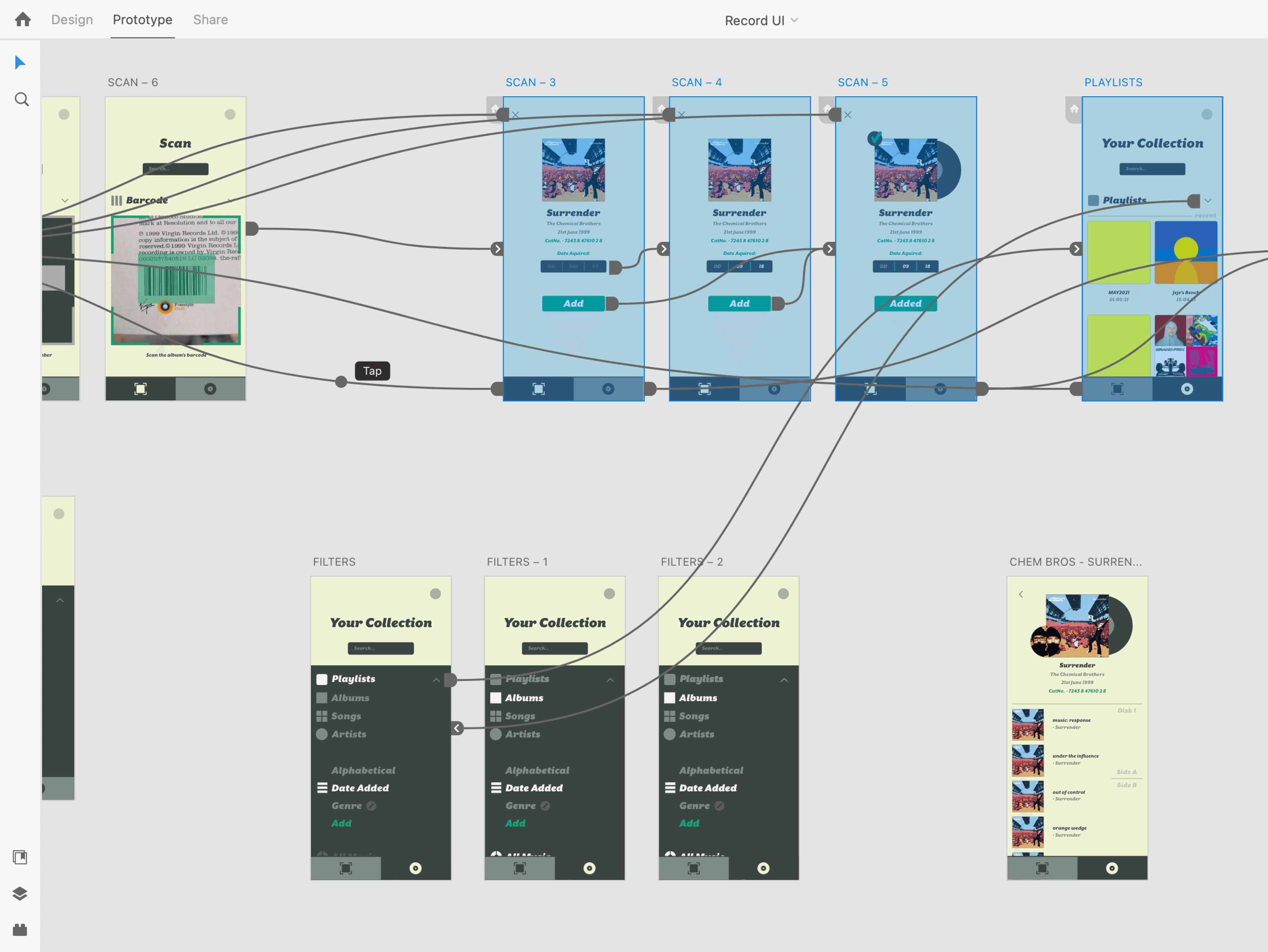
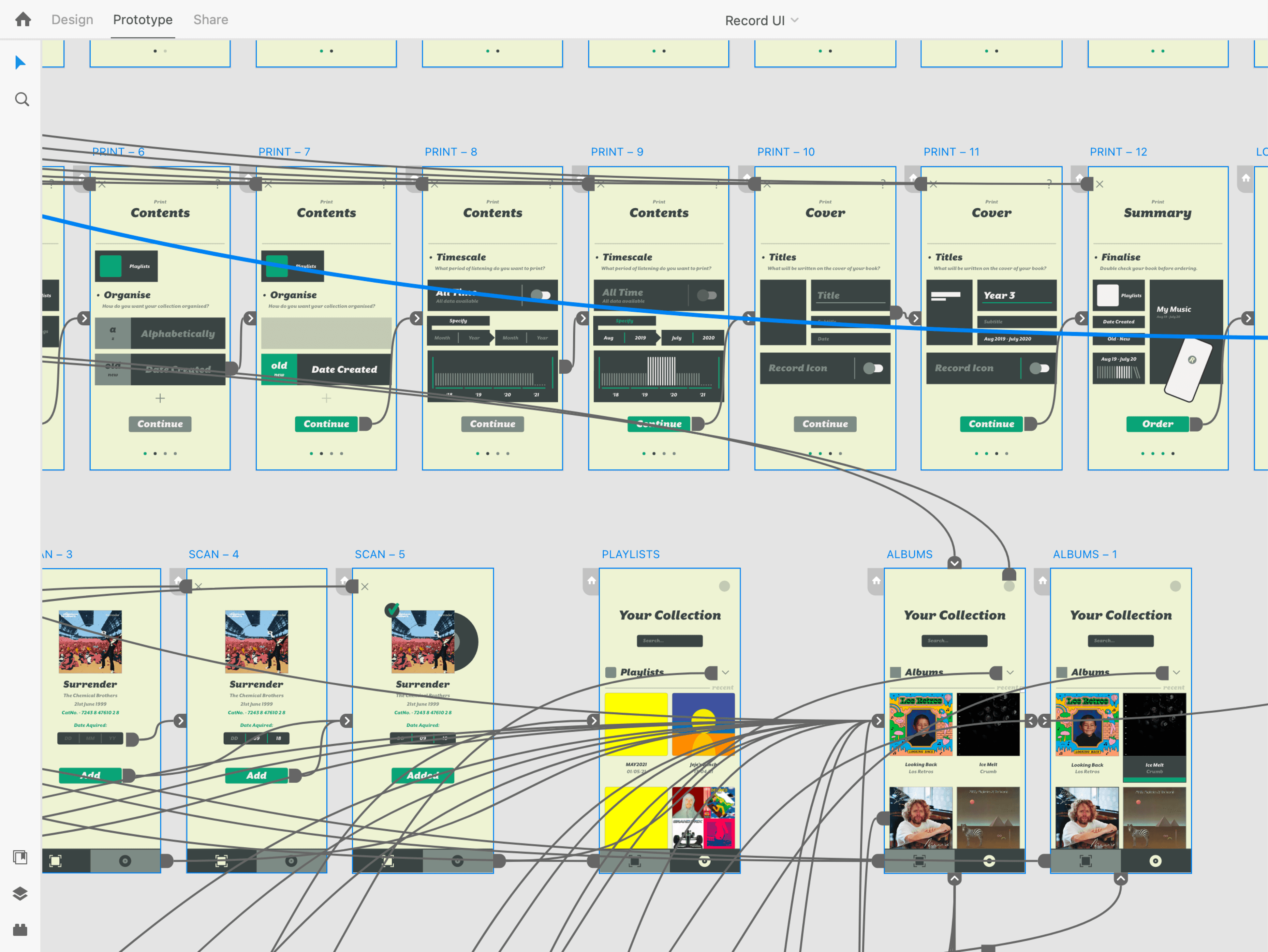
I turned these static screens into prototypes, drawing links between different elements to animate interactions. In having this, I was able to test and iterate on the design.
For example, I realised an issue where Callum - my digital streaming champion - wasn’t able to move music between two accounts of the same streaming platform. I only realised that Callum might want to do this when I observed him using the prototype.
I turned these static screens into prototypes, drawing links between different elements to animate interactions. In having this, I was able to test and iterate on the design.
For example, I realised an issue where Callum - my digital streaming champion - wasn’t able to move music between two accounts of the same streaming platform. I only realised that Callum might want to do this when I observed him using the prototype.
I turned these static screens into prototypes, drawing links between different elements to animate interactions. In having this, I was able to test and iterate on the design.
For example, I realised an issue where Callum - my digital streaming champion - wasn’t able to move music between two accounts of the same streaming platform. I only realised that Callum might want to do this when I observed him using the prototype.
Prototypes also served as a storytelling tool - since the app wouldn’t actually be developed - the prototype acted to show off its various features.
I eventually ended up with Record - a music collection app - with the core functionality of gathering the collector’s physical and/or digital music in one place - and from here allowing a series of sub-tools, such as moving music between digital accounts, or even printing the music in a book.
Prototypes also served as a storytelling tool - since the app wouldn’t actually be developed - the prototype acted to show off its various features.
I eventually ended up with Record - a music collection app - with the core functionality of gathering the collector’s physical and/or digital music in one place - and from here allowing a series of sub-tools, such as moving music between digital accounts, or even printing the music in a book.
Prototypes also served as a storytelling tool - since the app wouldn’t actually be developed - the prototype acted to show off its various features.
I eventually ended up with Record - a music collection app - with the core functionality of gathering the collector’s physical and/or digital music in one place - and from here allowing a series of sub-tools, such as moving music between digital accounts, or even printing the music in a book.
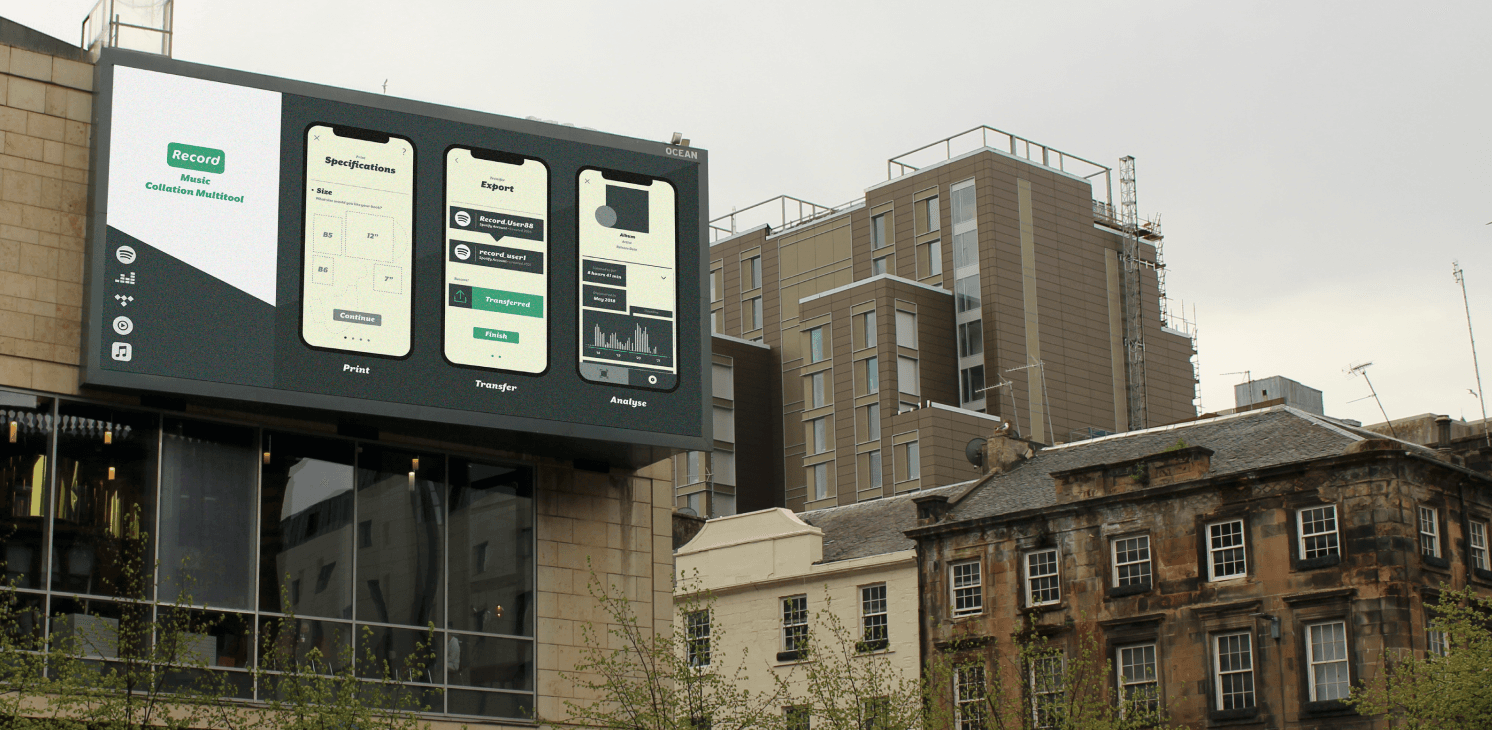
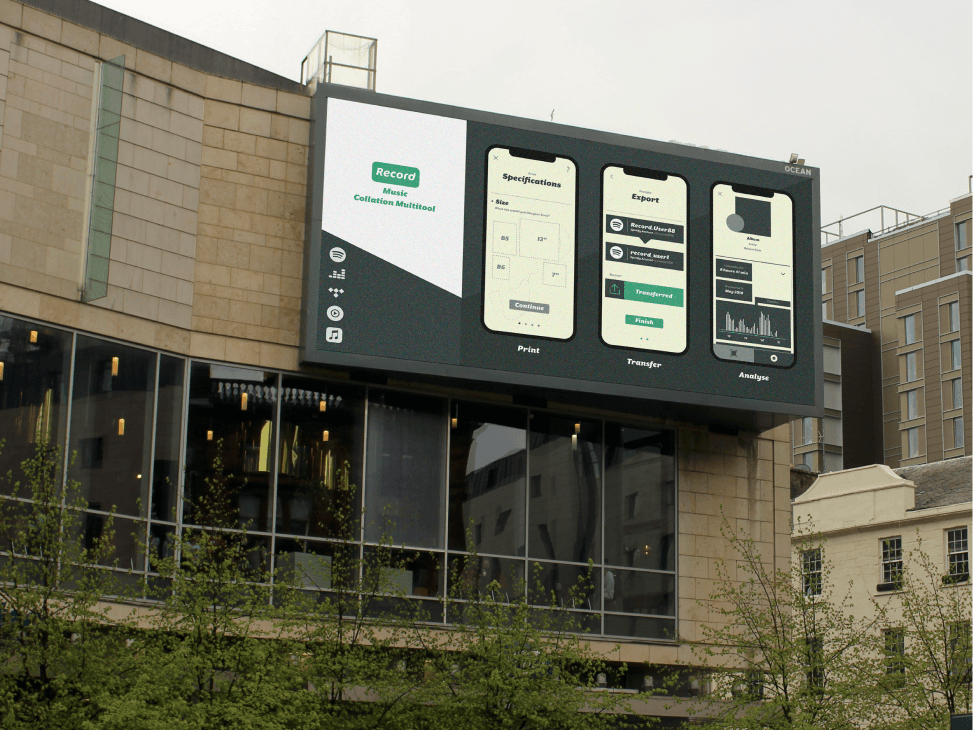
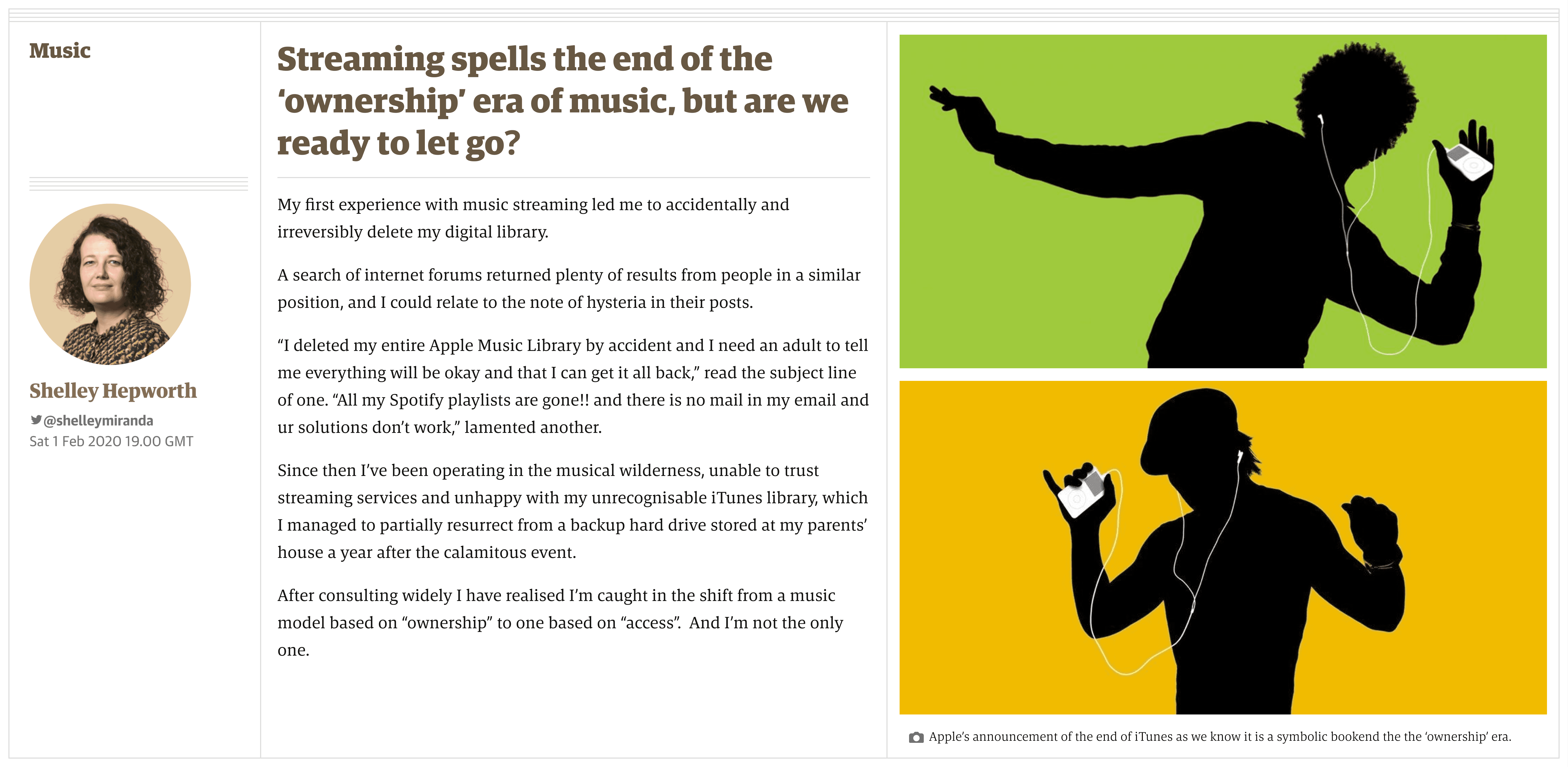
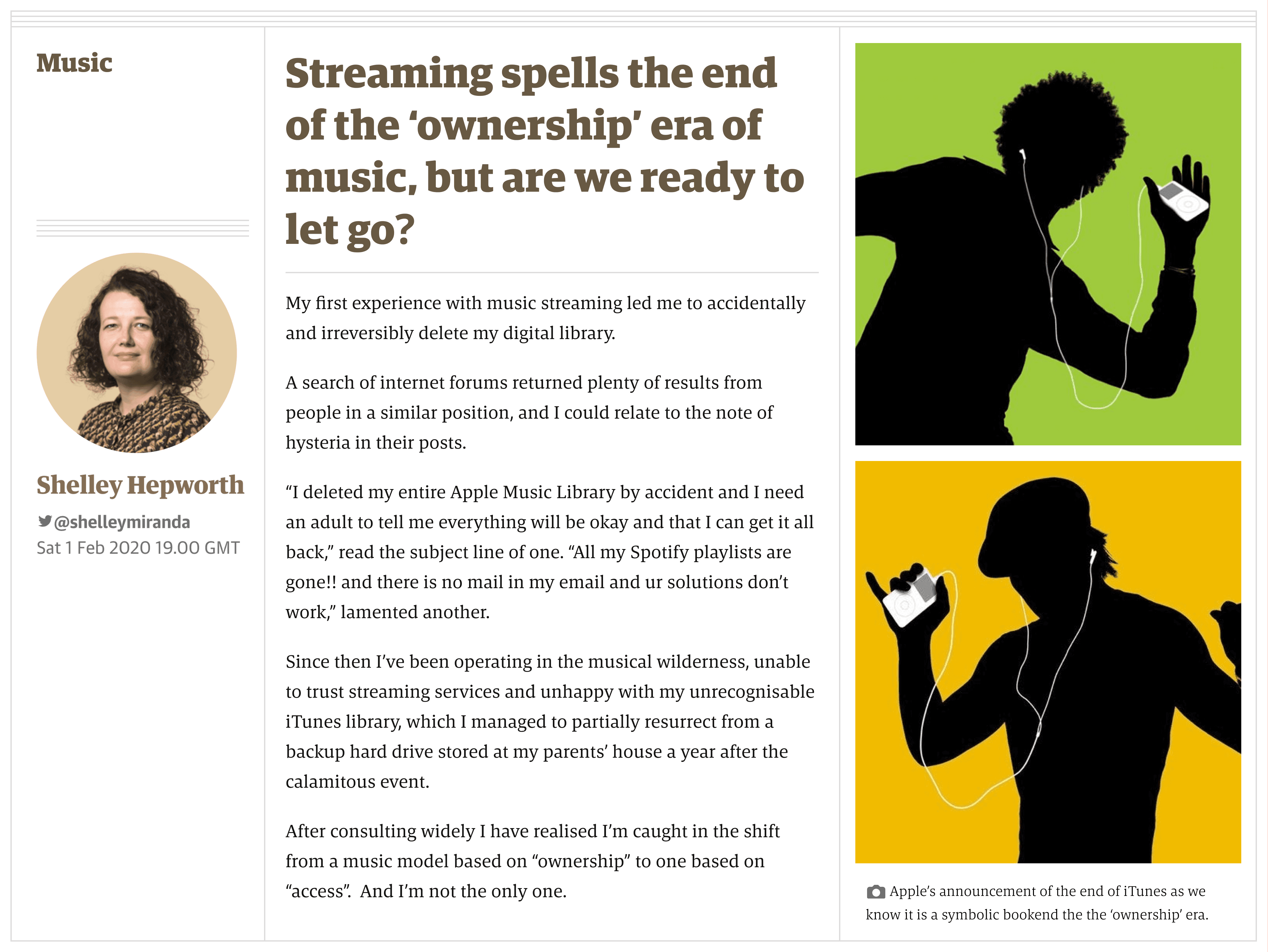
I wanted to place Record in the real world, and so I created a set of advertisements and news articles. This acted as a nice enhancement to Record's story.
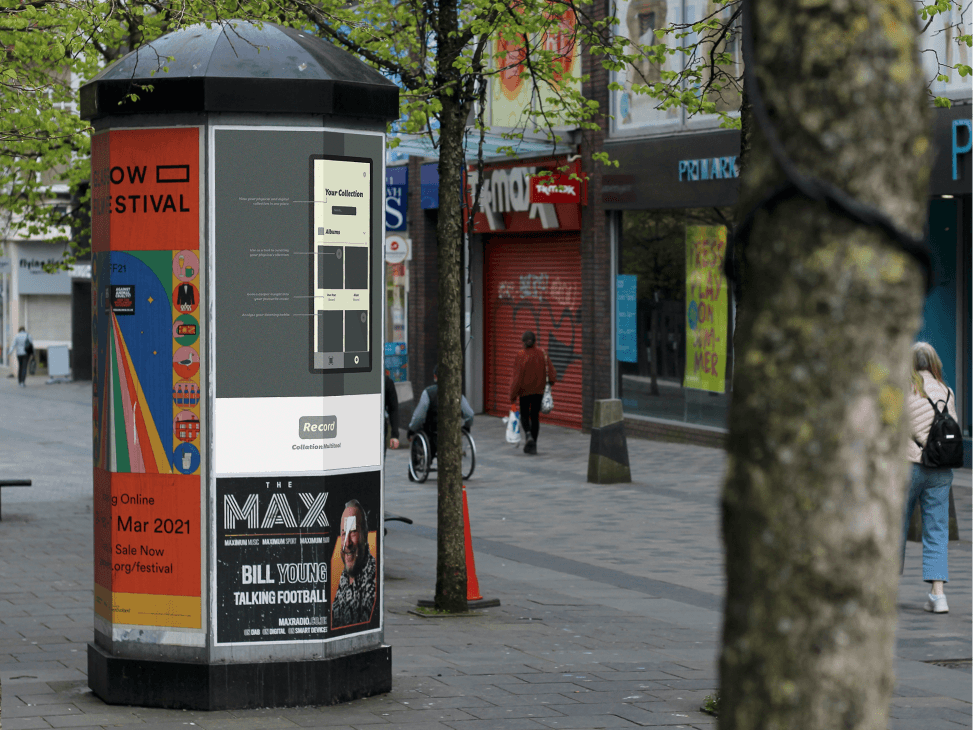
I wanted to place Record in the real world, and so I created a set of advertisements and news articles. This acted as a nice enhancement to Record's story.
I wanted to place Record in the real world, and so I created a set of advertisements and news articles. This acted as a nice enhancement to Record's story.